
Story and editing by Kristine Poelzer, Founder
Written by Jackie Craig
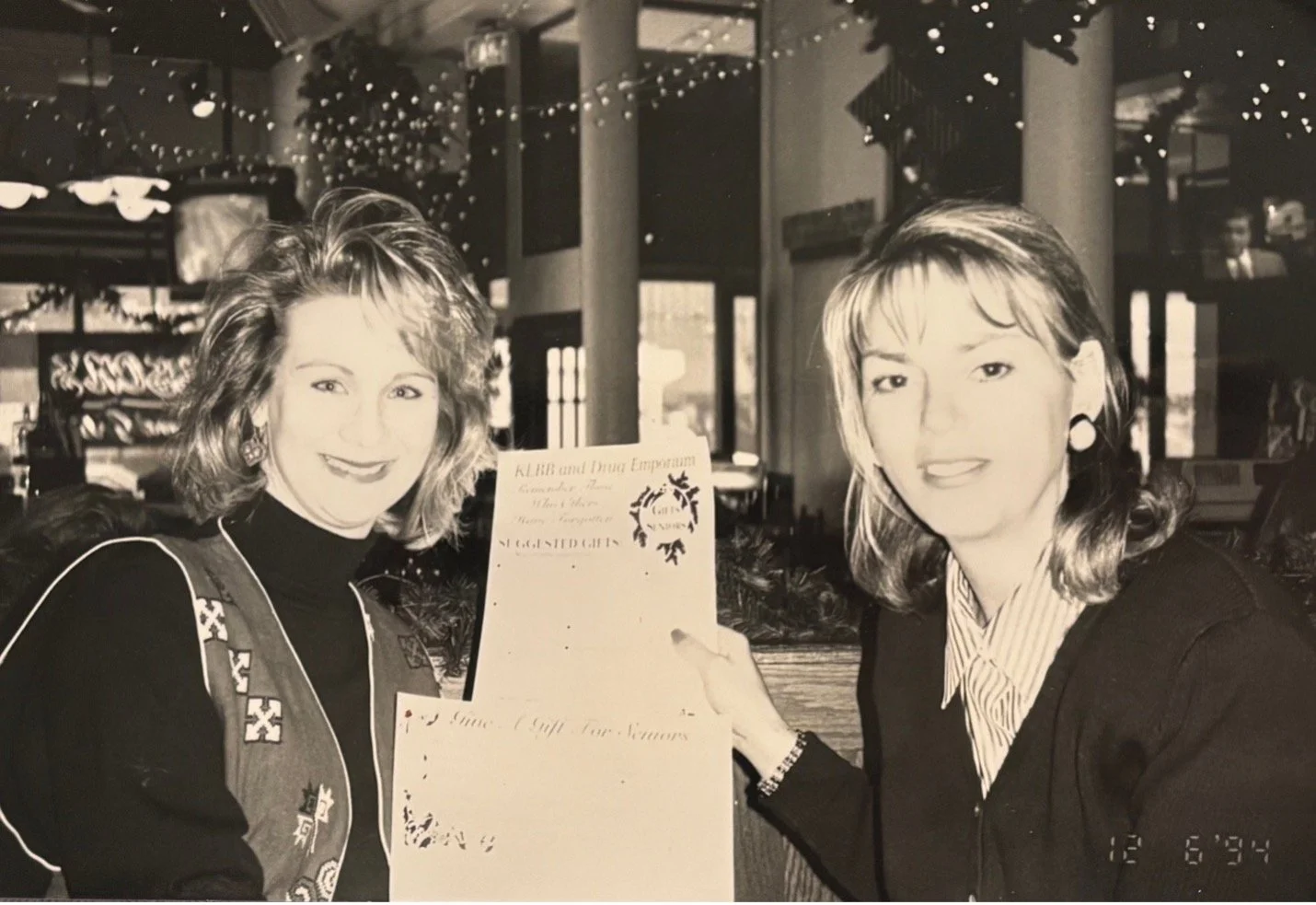
Kristine Poelzer and Karen Meger hold the first Gifts for Seniors wish list for new items and list of places that had donation gift barrels. November 1994
Long before Gifts for Seniors existed, Kristine Poelzer learned, at an elementary school age, what it meant to show compassion to someone who might otherwise be forgotten.
One of her earliest memories is standing beside her grandmother, Helen Zumberge, at luncheons after church funerals. A loyal volunteer, Helen would help others prepare and serve the food after the service for the guests and later gather the funeral flowers, to reshape them into small bedside bouquets. Helen brought Kristine with her to deliver them to very sick and weak elderly living in what was truly an old house with filled beds everywhere and a small handful of white-gowned nurses.
“I remember walking into what felt like a huge house with many beds, filled with sick and suffering older adults,” Kristine recalls. “I was intimidated; it was scary for me as a child. But my grandmother told me that good deeds often challenge you. And she was right. I always came away feeling amazed and blessed once the good deed was done.”
Those visits planted the first seeds of a lifelong calling.
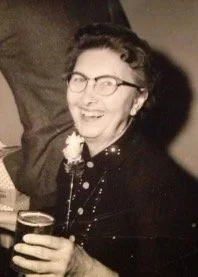
Kristine’s Grandma Zumberge, Helen, who was a steadfast volunteer serving countless people in need.
A Career in Service and a Growing Awareness
Years later, Kristine began working at Hennepin County at first with county administration. Then, serving low-income families, then, focusing on the needs of isolated seniors through managing a constellation of volunteer-supported programs.
The Befriender Program, where adults in their 50s and 60s visited isolated older adults every week or two.
The EMMY Program (Everyday Management of Money), where volunteers, including several retirees from Honeywell, visited seniors once or twice each month to assist with paying bills and upkeep of checkbook. These seniors were often clients of Adult Protection Social workers, who supervised the volunteers work as all the household bills would be paid timely and accurately.
Volunteers working directly in the homes of isolated seniors had thorough training including what to look for as mandatory reporters and how to make reports. They reported directly to the senior’s social worker.
And an internal initiative called the DayBrightener Program—a simple, early version of what Gifts for Seniors would eventually become.
The DayBrightener Program was humble but powerful: volunteers donated new $15 gifts along with attaching a cheery note signed “from a community member.” County social workers brought them on home visits as a gesture of kindness and often as a crucial opening to conversation. DayBrightener volunteers were often eager to shop and donate as they usually did not have available time for visits that other programs required.
“Too often,” Kristine says, “adult protection workers were responding to self-neglect: unpaid electric, gas, and water bills; utilities shut off or close to it; empty fridges; seniors who weren’t eating or drinking enough to think clearly. I kept asking myself: What could the community do to help these isolated seniors while professionals raced to turn things around?”
Her answer became the foundation of a movement:
“How about a donated gift for the seniors from the community, no strings attached?”
New clothing in a favorite color, warm sheets, soft towels, small comforts tailored to a senior’s real need. Requests poured in. Awareness grew. Social workers began spreading the word at their meetings. And the DayBrightener Program blossomed.
1994: The Spark That Started Gifts for Seniors
In October 1994, Kristine reached out to Karen Meger, an advertising executive at KLBB Radio. Kristine hoped Karen’s listeners would embrace the idea of donating gifts to isolated seniors.
They did and Gifts for Seniors was born.
Their first campaign launched with the tagline:
“Toys for Tots… but Not. Remember Those Whom Others Have Forgotten”
Gift barrels were donated at half-price thanks to Kristine’s persistence. Boy Scouts wrapped them in festive paper in KLBB’s garage. Hennepin County’s print shop created gift tags. Radio announcements spread the word across multiple counties, not just Hennepin.
People dropped off gifts in the barrels or at KLBB’s office. The program expanded organically to Ramsey County and beyond. A cadre of dedicated professionals donated their time for specific roles as part of an Operational Committee. Even without an official budget, Kristine kept things moving, until the program could become a non-profit. And still, it grew even faster.
A Red Minivan, Library Conference Rooms, and Breaking Down Barriers
As demand increased, Kristine and a small team of volunteer coordinators used everything at their disposal, including Kristine’s red minivan, affectionately called the “mobile gift site.”
Barrels were collected weekly. Library rooms were reserved so agency representatives could “shop” for their clients, selecting five items at a time to ensure fairness. Whatever remained was loaded back into the red minivan for storage. Eventually, Kristine secured a bartered operations center in Roseville before Gifts for Seniors even officially became a nonprofit.
A guiding principle emerged:
Break down every barrier between generosity and the seniors who needed a gift.
They adopted spreadsheets to help donors find drop-off sites, created a website, and expanded partnerships so social workers could request specific items for the seniors they served. When grieving families donated used or smoky items, precious belongings of their loved ones, Gifts for Seniors honored those gifts too, carefully routing them to thrift stores for reuse.
Everything, always, was done with dignity.
Kristine even integrated DayBrightener gifts into her work with county programs serving adults experiencing chemical dependency because isolation and hardship aren’t limited to one population.
Today: A Legacy That Continues to Grow
What started with funeral flowers and a grandmother’s gentle insistence on good deeds now annually serves thousands of isolated older adults across Minnesota.
Kristine reflects:
“How proud and thrilled I am that this nonprofit program now serves thousands of seniors through the amazing generosity of our community, countless hours of devoted volunteers, and brilliant program leadership.”
The pandemic illuminated the need even further:
“Isolation became unbelievably sad for everyone, but none more so than seniors who were already isolated. With so many struggling financially, how could we hope for donations? But hope and plan we must.”
Gifts for Seniors adapted again, inviting donors to shop and ship items directly through online stores that posted our wish lists. Plus encouraging makers to craft warm hats, mittens, and quilts. The mission remained the same:
Remember those whom others have forgotten.
Kristine closes with the heartfelt plea that launched every chapter of this work:
“I ask that you help us, especially in times like these. Any new item on our wish list, any handmade gift, every act of compassion helps us do what we do best.
Gratefully,
Kristine Poelzer”
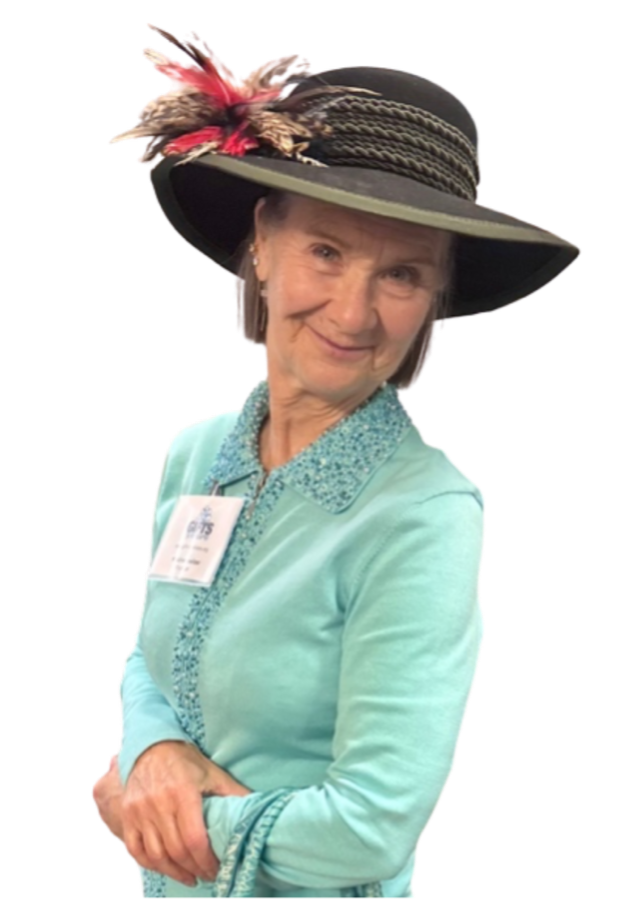
Kristine Poelzer
Kristine, wearing one of her hats, at the 2025-26 Gifts for Seniors kickoff party.